This is a slow burning project. Over the past 12 months, I’ve been thinking about, and speaking with others about working more slowly – finding a new way to balance creative projects that might not happen in a sudden burst, but in a more sustained and gradual build. Partially, this is out of necessity – from balancing new family life and working patterns, but also out of a desire for a different way of working, an experiment into the value of building projects over a longer period of time and allowing them to take a more organic route than sticking to restrictive funding commitments. It’s an experiment, and I’m starting with this fixation on bells.
Fortunately, there’s lots to learn.
The making and founding of bells has an illustrious history, both across Britain and around the world – and for good reason – as the making of a proper bell is a serious technical skill. From form to tone, I suspect a lifetime or more could be spent hone-ing these skills. So I’ve began small.
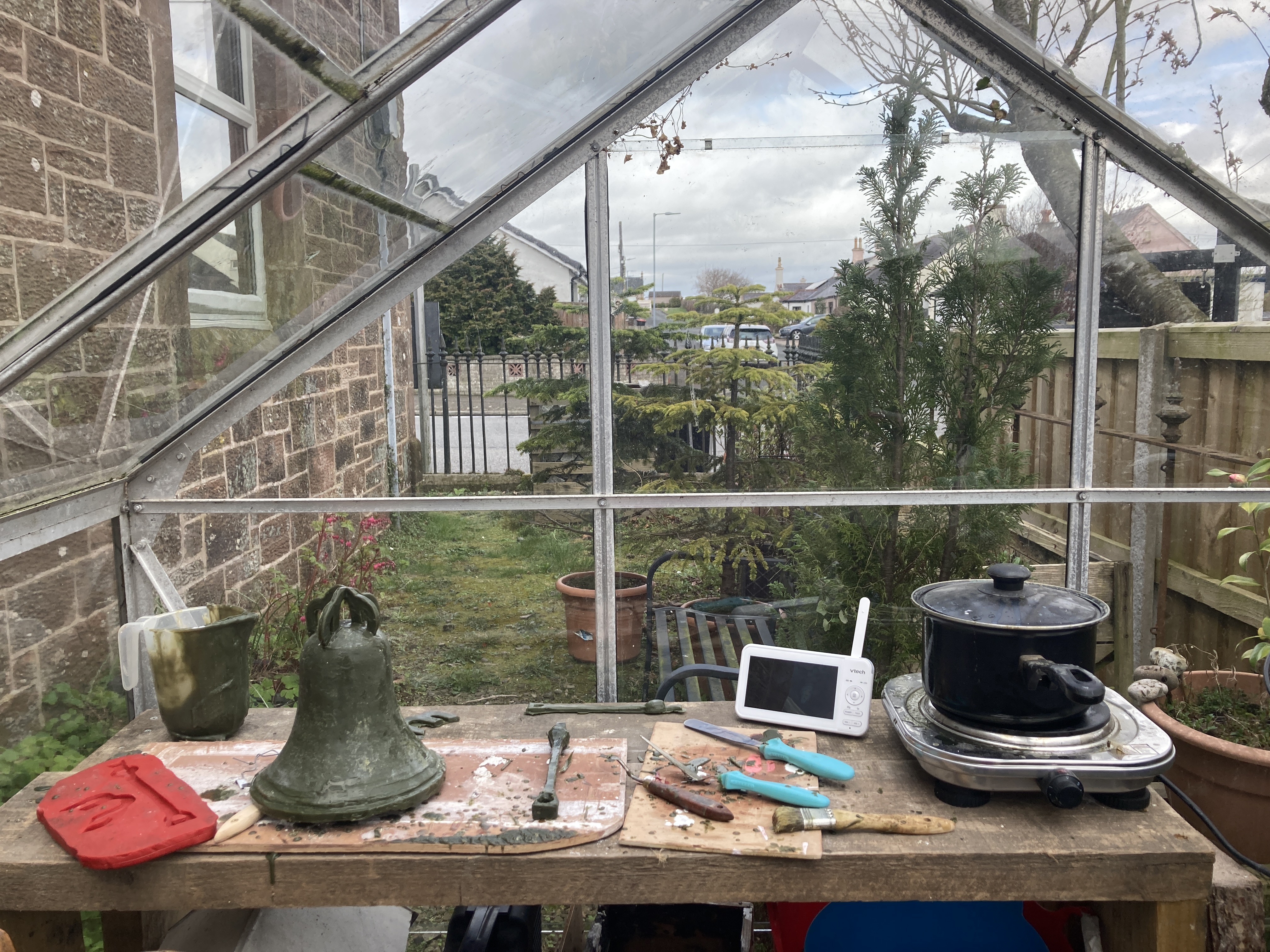
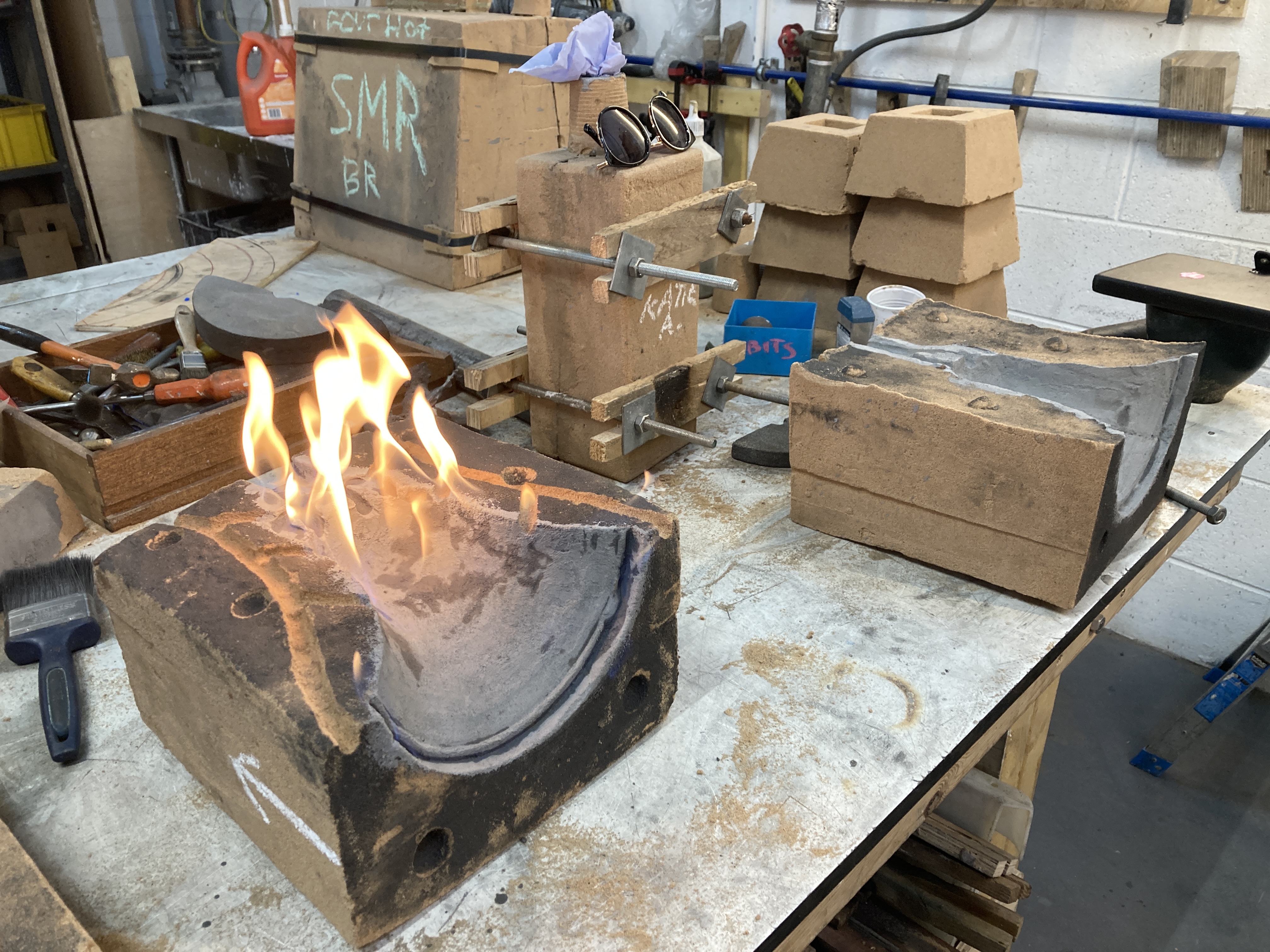
Last Summer, Edinburgh Sculpture Workshop partnered with Coles Castings to build and begin to test a new furnace for iron – experimenting with using a sustainable bio-fuel instead of gas as a fuel source. Since then, the ESW team have been adapting and working on the set up to get a consistent run for casting in iron, and through the Autumn of 2025 and Spring of this year, I made a couple of sand molds to test an idea for cast iron bells using their new furnace.
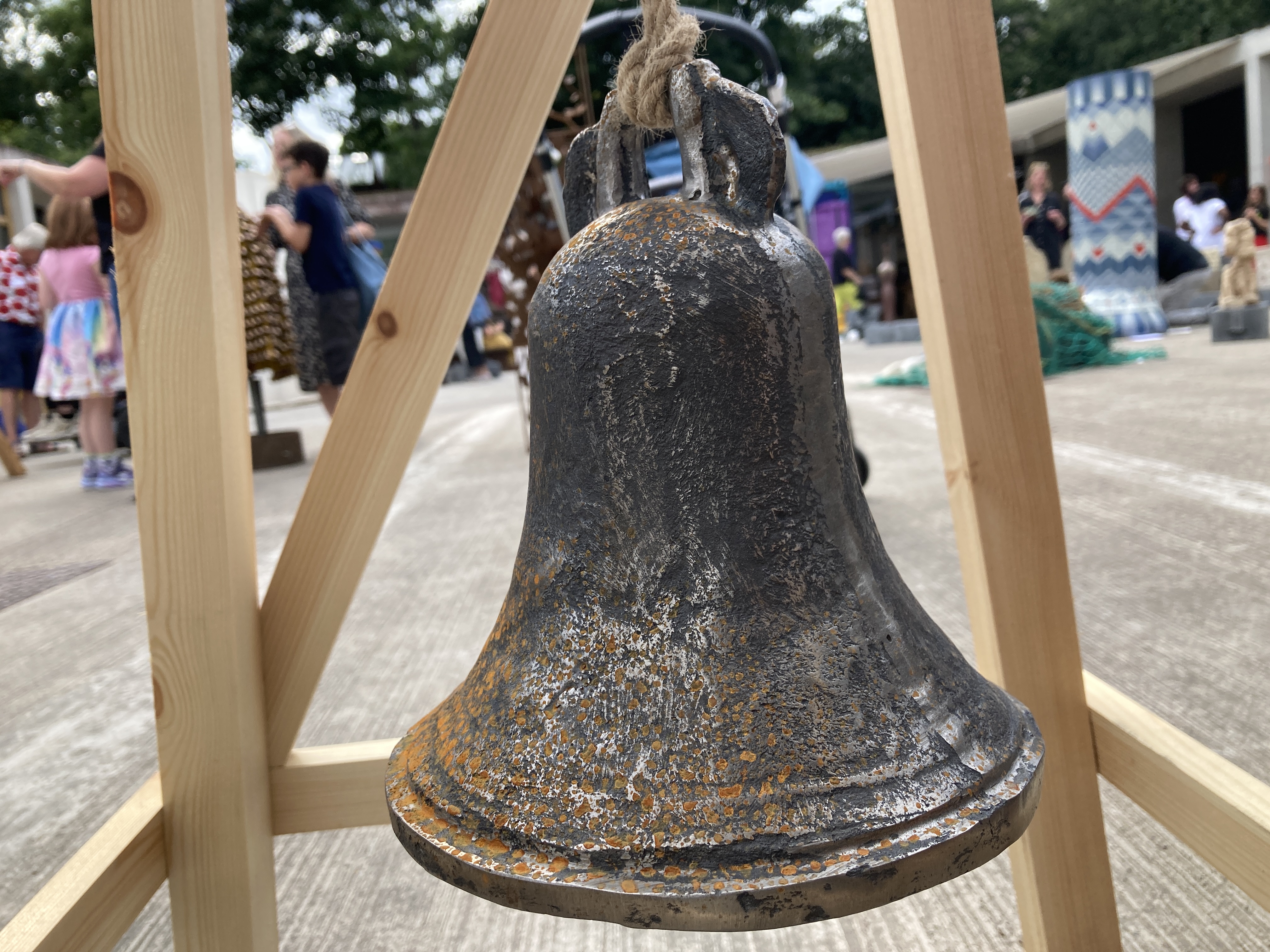
Traditionally bell molds have been created not using sand casting, but an alternative method using loam (a mixture of clay and sand, often with added organic materials like horsehair), or lost wax/ciment perdue. My first run of sand molds made it pretty clear where there are some obvious parts that might improve by a change in technique – particularly the canons (the top section from which the bell can be hung) and in controlling the thickness and profile of the bell walls, which is important for the final sound of the bell.
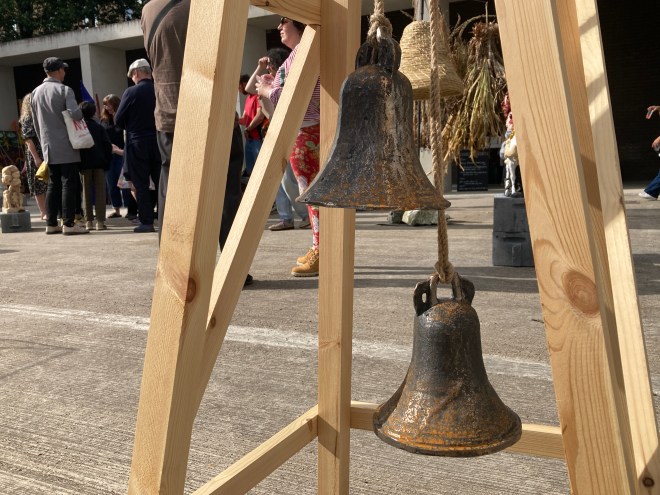
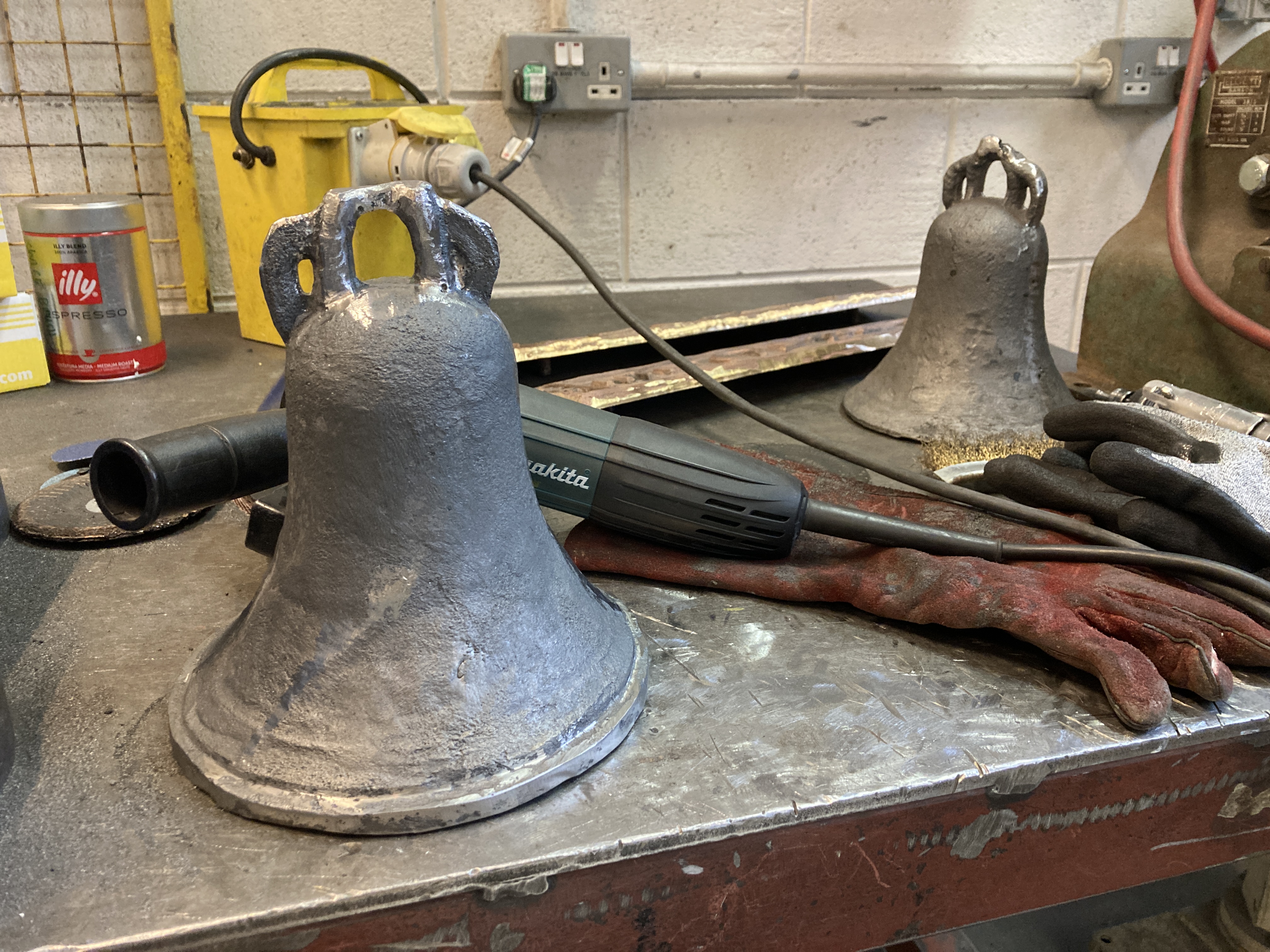
The bells were cast by the ESW team (thank you Steve and team!) and I did some gentle finishing before the Spring Fling studios back in May this year (finishing iron is not like finishing bronze!). Iron is fascinating material to work with, and brings an entirely different identity to the bells – from weight and heft to finish and it’s relationship with water and air (rust!) An opportunity to display the bells at ESW as part of their Big Spell event in August resulted in creating a temporary bell-frame for the bells to hang – silently -, and also to pop up quickly in any given location. For the bells to ring, I’ll need to get to work on a ringing mechanism – and some more casting work!
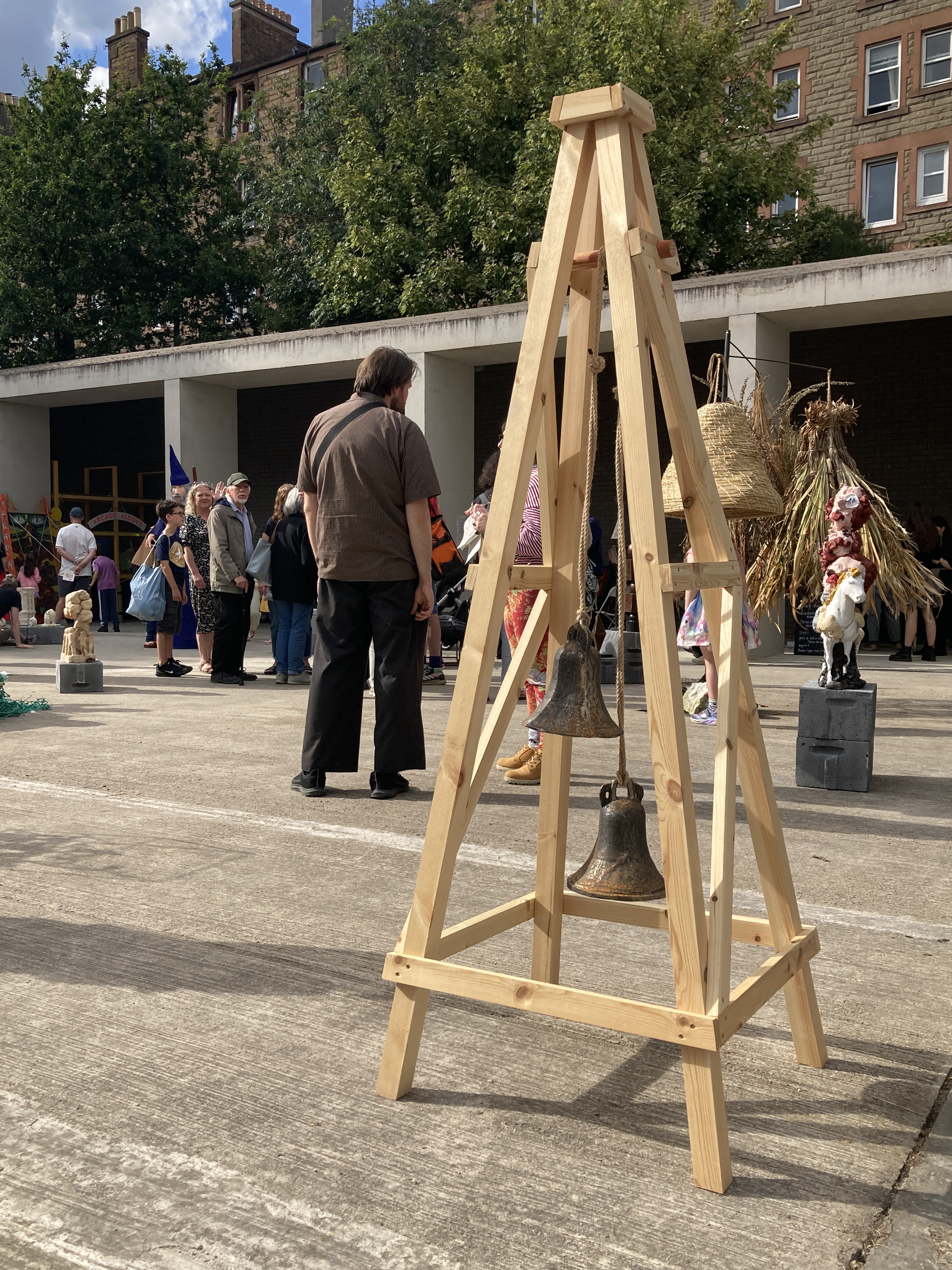
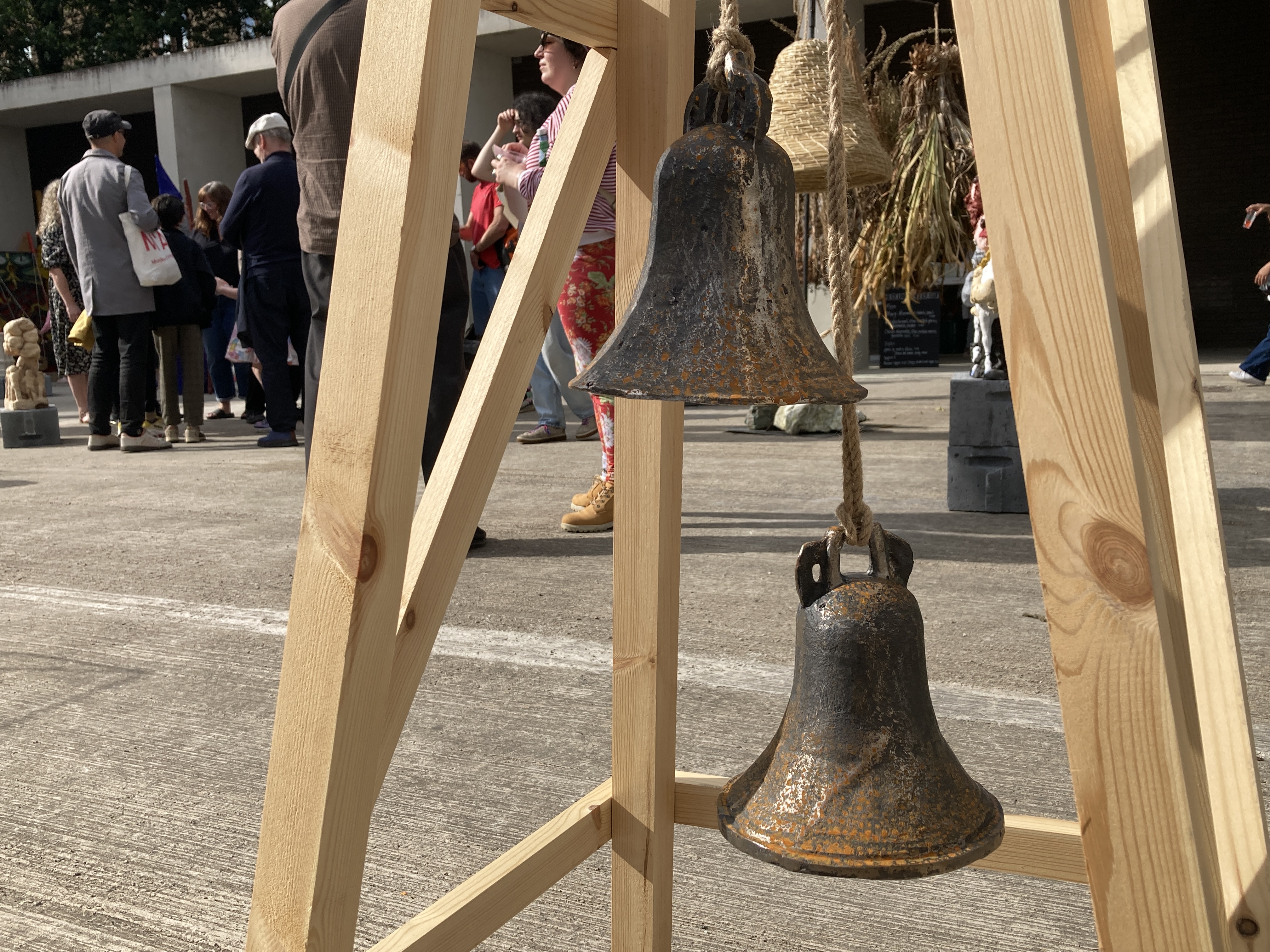
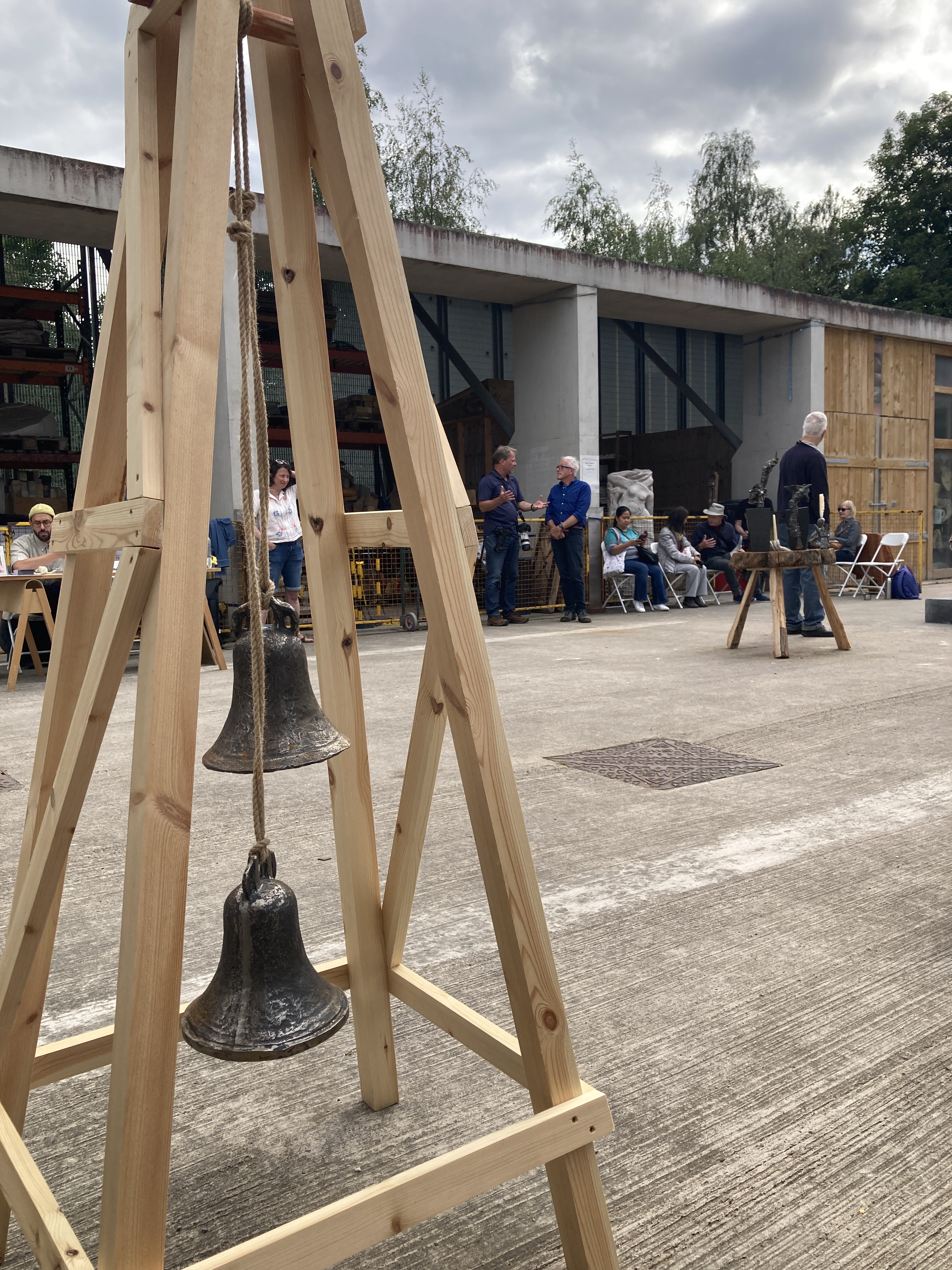
The end of the Summer has been busy with some painting work and as we move into the Autumn, I’m planning to move into some more studio work (hello bells and bell-ringing) and also preparing to host some bell-themed activity and conversations with the support of WWDN’s Sparks fund, more about that available here. This work will take me through the Winter and likely back out into the Spring again – that focus on slow working withstanding.

